
Le bracelet à perles plates est très tendance. Il est apprécié tant par les hommes que par les femmes. Il ajoute une touche d’élégance et de style à votre look. Dans cet article, explorons les raisons pour lesquelles le bracelet à perles plates est devenu si populaire, qui peut le porter, comment le choisir, comment l’assortir à son style vestimentaire et à ses autres bijoux, les différents types disponibles sur le marché, et enfin comment l’entretenir correctement. Préparez-vous à découvrir tous les détails sur ce bijou polyvalent et chic !
Qu’est-ce qu’un bracelet Heishi ? Quelle est son origine ?
Le bracelet Heishi est un type de bracelet fait avec des perles plates. Ce sont ces perles qui sont appelées perles Heishi. Les perles Heishi sont fabriquées à partir de coquillages, de pierres ou de verre et sont souvent teintées dans une variété de couleurs.
L’origine des perles Heishi remonte à plusieurs milliers d’années et est associée aux cultures amérindiennes du Sud-Ouest des États-Unis, en particulier les peuples Pueblo et Navajo. Les perles Heishi étaient traditionnellement fabriquées à partir de coquillages récoltés sur les côtes du Pacifique, puis façonnées à la main en utilisant des outils en pierre. Les perles étaient ensuite enfilées sur des fils pour créer des colliers, des bracelets et d’autres bijoux
Qui peut porter un bracelet à perles plates ?
Un bracelet à perles plates peut être porté aussi bien par les femmes que par les hommes.
Les hommes peuvent-ils porter un bracelet à perles plates ?
Le bracelet à perles plates n’est pas seulement réservé aux femmes. Il est devenu une tendance phare aussi bien pour les hommes modernes qui souhaitent ajouter une touche de style à leur look. Des célébrités masculines aux influenceurs de mode, de plus en plus d’hommes adoptent le bracelet à perles plates. Il est parfait pour compléter une tenue décontractée ou ajouter une touche de sophistication à une tenue plus formelle.
Les femmes peuvent-elles porter un bracelet à perles plates ?
Absolument ! Le bracelet à perles plates est également un choix élégant pour les femmes. Il peut être porté pour des occasions spéciales ou au quotidien pour compléter une tenue décontractée. Que vous soyez fan du style minimaliste ou que vous préfériez un look plus audacieux, le bracelet à perles plates s’adapte à tous les styles.
Comment choisir la taille de son bracelet à perles plates ?
Choisir la bonne taille de bracelet à perles plates est essentiel pour un port confortable et esthétiquement agréable. Pour mesurer votre poignet, utilisez un mètre-ruban ou une ficelle et mesurez-le autour de la partie la plus large de votre poignet. Ajoutez ensuite un centimètre à cette mesure pour obtenir la longueur idéale du bracelet à perles plates. Il est également important de considérer si vous préférez un ajustement serré ou plus lâche.
À quel style vestimentaire le bracelet à perles plates est-il adapté ?
Comment porter un bracelet à perles plates avec une tenue décontractée ?
Le bracelet à perles plates est un excellent choix pour rehausser une tenue décontractée. Vous pouvez le porter avec un t-shirt et un jean pour ajouter une touche de sophistication à votre look quotidien. Les bracelets à perles plates en bois ou en cuir sont particulièrement adaptés aux tenues décontractées, car ils ajoutent une sensation naturelle et rustique.
Comment porter un bracelet à perles plates avec une tenue élégante ?
Si vous souhaitez rendre votre tenue élégante encore plus impressionnante, optez pour un bracelet à perles plates en métal poli ou en pierres précieuses. Ces bracelets ajouteront une touche de glamour subtile à votre look. Vous pouvez associer un bracelet à perles plates en argent avec une robe de soirée ou un bracelet à perles plates en or avec un costume pour un effet sophistiqué.
Comment assortir son bracelet à perles plates à ses autres bijoux ?
Pour un look harmonieux, il est essentiel d’assortir votre bracelet à perles plates à vos autres bijoux. Si vous portez d’autres bracelets, assurez-vous qu’ils ont une dimension similaire pour une apparence équilibrée. Pour les femmes, un bracelet à perles plates peut être porté avec une montre assortie pour un look moderne et chic. N’oubliez pas de considérer également la couleur des perles plates et de les assortir à vos autres bijoux en fonction de votre tenue.
Les différents types de bracelets à perles plates
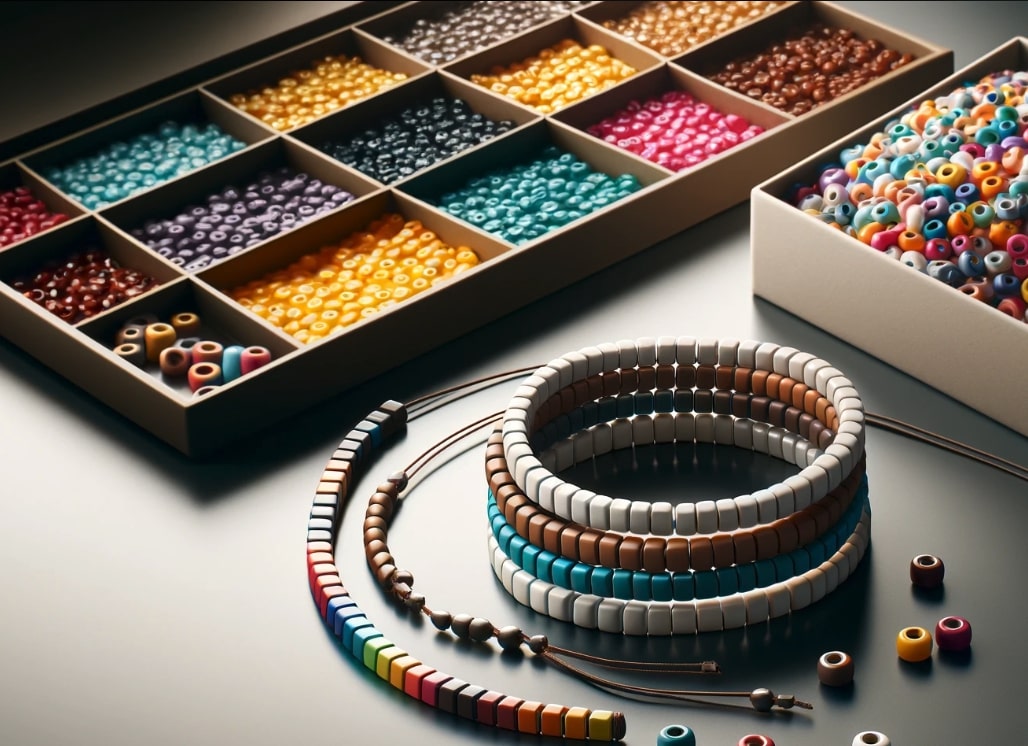
Les bracelets à perles plates en pierres naturelles
Les bracelets à perles plates en pierres naturelles sont très prisés pour leur beauté naturelle et leurs propriétés énergétiques. Des perles plates en pierres comme l’agate, le jaspe, ou l’améthyste peuvent être utilisées pour créer des bracelets uniques et significatifs. Chaque pierre a ses propres vertus, vous permettant de combiner style et bien-être.
Les bracelets à perles plates en métal
Les bracelets à perles plates en métal sont appréciés pour leur aspect intemporel et élégant. Vous pouvez opter pour des modèles en argent, en acier inoxydable ou en or, selon vos préférences personnelles. Les bracelets à perles plates en métal ajoutent une touche de brillance à votre poignet et s’adaptent facilement à tous les styles vestimentaires.
Les bracelets à perles plates en cuir
Les bracelets à perles plates en cuir offrent une option plus décontractée et bohème. Ils sont parfaits pour un look hippie-chic ou pour ajouter une touche décontractée à une tenue simple. Choisissez entre différentes nuances de cuir et des perles plates en bois pour un look naturel et authentique.
Comment entretenir son bracelet à perles plates ?
Comment nettoyer son bracelet à perles plates ?
Pour nettoyer votre bracelet à perles plates, utilisez un chiffon doux et humide pour enlever la saleté ou les résidus. Évitez les produits chimiques agressifs qui pourraient endommager les perles plates. Si votre bracelet à perles plates est en métal, vous pouvez le polir avec un produit spécialisé pour lui redonner son éclat d’origine.
Comment ranger son bracelet à perles plates ?
Pour éviter que votre bracelet à perles plates ne s’emmêle ou ne se raye, il est préférable de le ranger à plat dans un écrin à bijoux ou dans un sachet en tissu doux. Séparez-le des autres bijoux pour éviter les frottements qui pourraient l’endommager.
Comment éviter d’endommager son bracelet à perles plates ?
Évitez de porter votre bracelet à perles plates lors d’activités physiques intenses ou lorsque vous êtes en contact avec des produits chimiques. Les perles plates peuvent être fragiles, il est donc préférable de les protéger de tout ce qui pourrait les érafler ou les casser.
Conclusion
Le bracelet à perles plates est un accessoire de mode qui égaiera votre apparence. Que vous soyez un homme ou une femme, il existe des modèles et des styles pour tous les goûts. De la tenue décontractée à l’élégante, le bracelet à perles plates s’adapte parfaitement à votre style vestimentaire.


